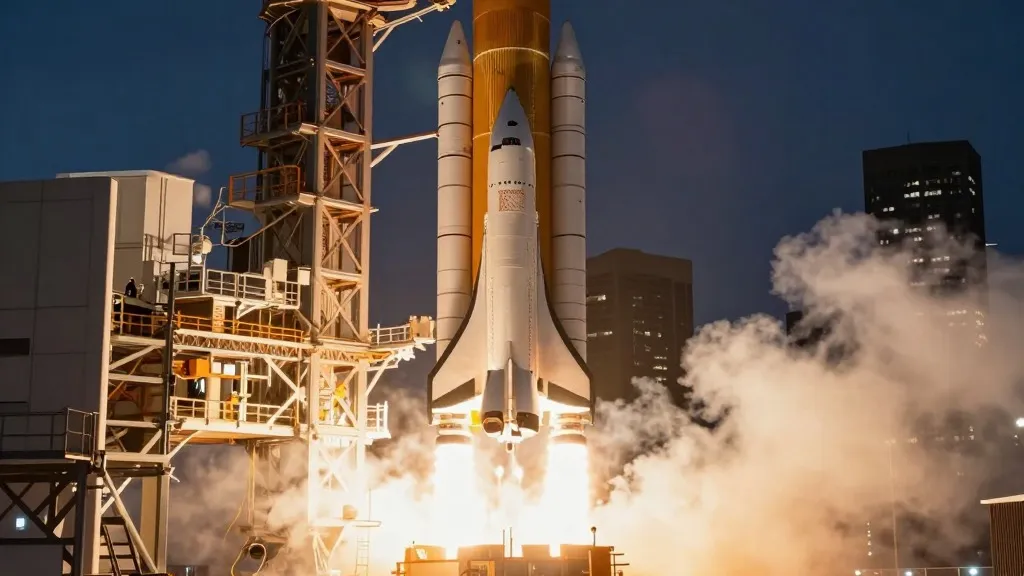
NASA Reveals 22 Starship Launches Needed for Lunar Return
A recent advisory panel presentation suggests the number of flights required to fuel a Moon lander is significantly higher than previously implied by agency officials.
By Gabriela Flores ·
Twenty-two. That is the specific figure that has emerged from behind the curtains of NASA’s Artemis Program, representing the estimated number of Starship launches necessary to support a crewed lunar landing. The number, disclosed during a recent safety review, marks a decisive break from the agency’s long-standing practice of keeping this critical logistical metric under wraps, often treating it with the same secrecy usually reserved for classified defense codes.
The revelation came on Thursday during the quarterly meeting of the NASA Aerospace Safety Advisory Panel. Charlie Precourt, a former astronaut and current panel member, discussed the risks associated with returning humans to the Moon. While the agency has historically avoided pinning down exact figures for the propellant logistics required in low-Earth orbit, Precourt’s presentation offered a concrete data point that challenges previous assumptions about the timeline and feasibility of the mission.
For years, NASA officials have danced around the question of how many flights are needed to fuel a Starship-based lunar lander sufficiently for the trip to the Moon, the landing, and the return to orbit. The general stance has been one of cautious non-disclosure, with the argument that the number is not yet settled. In 2023, Lisa Watson-Morgan, who served as the director of the Human Landing System, told reporters that while the agency had a "general idea," she was reluctant to state it exactly. Her comments at the time suggested a range of "high single digits to the low double digits," which would have implied roughly a dozen launches.
That earlier estimate would have required SpaceX to launch one "depot" Starship to orbit, followed by eleven "tanker" Starships to load it with liquid oxygen and methane. While already a substantial logistical undertaking, the new estimate of twenty-two launches more than doubles that requirement. Other NASA officials had previously cited "high teens" as a possible range, but the current figure suggests the situation may be worse than those earlier, optimistic projections indicated.
The jump in the required number of flights has raised eyebrows within the agency and among its partners. The core issue is the rate at which SpaceX can improve the lift capacity of the Starship vehicle. The original hope was that significant upgrades to the rocket’s performance would drastically reduce the number of tanker flights needed. However, concerns are growing among some NASA officials that these improvements may not materialize soon enough, or at all, to allow Starship to play a meaningful role in this decade’s Artemis objectives.
If the twenty-two launch estimate holds, the logistics of the mission become a formidable challenge. It implies a sustained, high-tempo launch cadence from the Florida coast to build up the necessary fuel depot in orbit. This is not merely a matter of rocketry; it is a test of operational endurance and supply chain management on a scale that has rarely been attempted in crewed spaceflight.
The shift from vague ranges to a specific, higher number adds pressure to the timeline. If the lift capacity does not improve as hoped, the window for returning astronauts to the lunar surface using Starship this decade becomes narrower. The agency must now decide whether to proceed with the current trajectory or if the logistics demand a re-evaluation of the plan’s feasibility within the next few years.
As the panel continues to review these risks, the focus will remain on whether the hardware can perform as projected or if the operational tempo is sustainable. For now, the number twenty-two stands as the baseline for planning, a stark reminder that the path back to the Moon is paved with more rocket flights than previously estimated.
Source: Ars Technica