NHTSA Proposes Cyan Lighting Standard for Autonomous Fleets
Federal regulators are seeking to standardize blue-green marker lamps to distinguish robotaxis from human-driven vehicles.
By Mei Ling ·
The regulatory framework governing automotive lighting has largely remained static since the mid-20th century, designed for a world where a human hand always controls the wheel. However, the rapid expansion of autonomous vehicle fleets is forcing a reconsideration of these long-standing visual cues, as agencies seek to clarify the interface between self-driving technology and traditional traffic infrastructure.
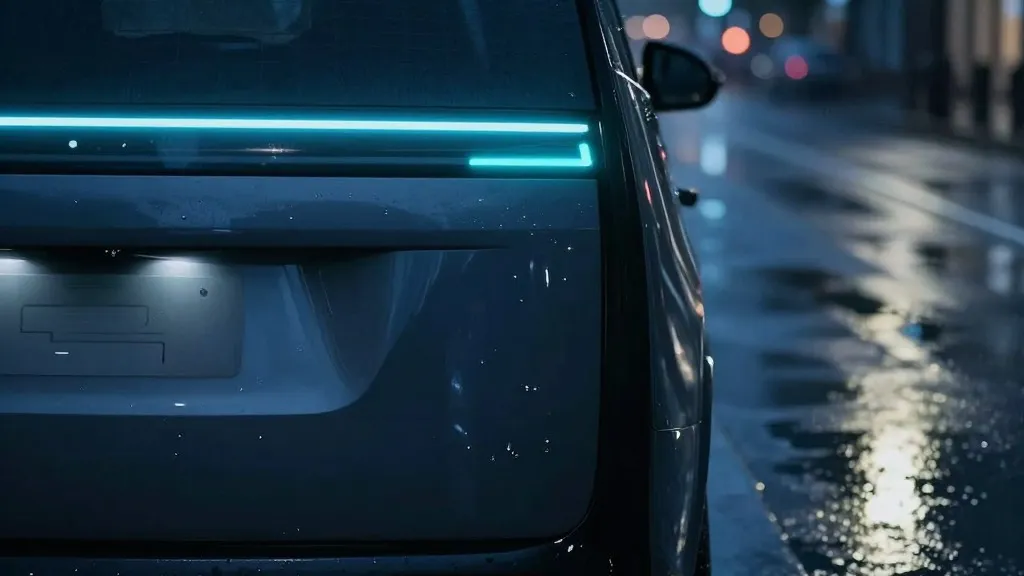
The National Highway Traffic Safety Administration has released proposed amendments to Federal Motor Vehicle Safety Standard No. 108, specifically targeting the integration of automated driving systems. The core of the proposal mandates the use of cyan-colored marker lamps to indicate that a vehicle is operating in autonomous mode. This specific hue is intended to provide a distinct visual signal to law enforcement and other road users, differentiating driverless operations from standard manual driving.
The choice of cyan is driven by market necessity and visual spectrum analysis. Current automotive lighting conventions are saturated with red for braking, amber for signaling, white for illumination, and flashing blue or red for emergency services. By selecting a blue-green wavelength, regulators aim to fill an existing visual gap without introducing cognitive load or confusion for drivers navigating shared roadways. This approach standardizes a signal that can be recognized across different manufacturers and service providers.
The proposal creates a uniform federal baseline for major industry players, including robotaxi operators such as Waymo, Nuro, and Zoox, as well as traditional automakers like General Motors and Mercedes-Benz. While Mercedes-Benz previously received state-level approval for turquoise lights on its Level 3 Drive Pilot vehicles, the automaker subsequently moved toward a Level 2++ system. The new federal standards aim to prevent a fragmented market where each company adopts a unique lighting scheme, instead offering a consistent, legally compliant setup for all autonomous deployments.
For manufacturers, the installation of these cyan marker lights would be optional. However, if an automaker chooses to implement the feature, the proposal dictates specific parameters regarding color, brightness, and physical placement on the vehicle. This regulatory structure ensures that the signal remains consistent across the fleet, preventing a confusing mix of varying intensities or hues that could undermine the clarity of the autonomous status indicator.
Beyond adding new signals, the agency is streamlining existing rules that are redundant for human-free designs. The proposal seeks to eliminate requirements for physical interior controls, such as hazard switches, manual beam shifters, and turn levers, which serve no functional purpose in a fully automated cabin. Additionally, NHTSA is updating the 12.8-volt testing standard to accommodate modern LED architectures, reducing administrative barriers for engineers designing next-generation electrical systems.
The agency is also reconsidering the positional requirements for high-beam and low-beam lights, potentially allowing for more flexible headlight assembly designs. This update is part of a broader Department of Transportation initiative to streamline the deployment of autonomous vehicles. The goal is to facilitate the production of vehicles that may lack traditional human-operated controls, such as steering wheels and pedals, by aligning safety standards with the technological reality of driverless cars.
Despite these forward-looking proposals, regulators continue to enforce current rules strictly during the transition period. Last month, NHTSA opened an audit query into the Tesla Cybercab to examine the technical data and processes used during its certification. The inquiry focuses on the absence of certain design features, including sideview mirrors, pedals, and a steering wheel, which are currently mandated under existing FMVSS regulations. This dual approach signals a regulatory environment that is evolving standards while maintaining rigorous oversight of current compliance.
Source: The Verge